
Minimalism is no longer about empty rooms and strict white palettes—decor trends 2027 for minimalist homes are shifting toward warmth, intention, and livability. If you’ve ever felt that minimalist spaces look beautiful but feel cold or impractical, this new wave of design solves that problem.
This guide breaks down what’s changing, what’s worth adopting, and how to apply these trends in real life—whether you’re redesigning a small apartment or refining a modern home. Expect practical ideas, real examples, and smarter ways to create a minimalist space that actually feels like home.
Article Contents
Minimalism in 2027: What’s Changing (And Why It Matters)
Minimalism in 2027 looks noticeably different from what dominated the past decade. The era of ultra-sterile interiors is fading, replaced by something far more human.
From “less stuff” to “better living”
Minimalism used to focus heavily on reducing clutter. That still matters, but the emphasis has shifted toward intentional living—keeping what adds value and removing what doesn’t.
This means:
- Choosing items based on purpose and emotional connection
- Designing spaces around daily routines, not aesthetics alone
- Prioritizing comfort just as much as visual simplicity
The lifestyle-first approach
Homes are now being designed around how people actually live. Remote work, digital fatigue, and the desire for calm environments are shaping design decisions.
You’ll notice:
- Flexible spaces that adapt throughout the day
- Calm zones designed for mental recharge
- Layouts that reduce visual noise and distractions
Why this shift matters
A minimalist home in 2027 isn’t about impressing others—it’s about supporting your lifestyle. The result is a space that feels lighter, more personal, and far easier to maintain.
The New Minimalist Color Story: Warm, Earthy, and Layered
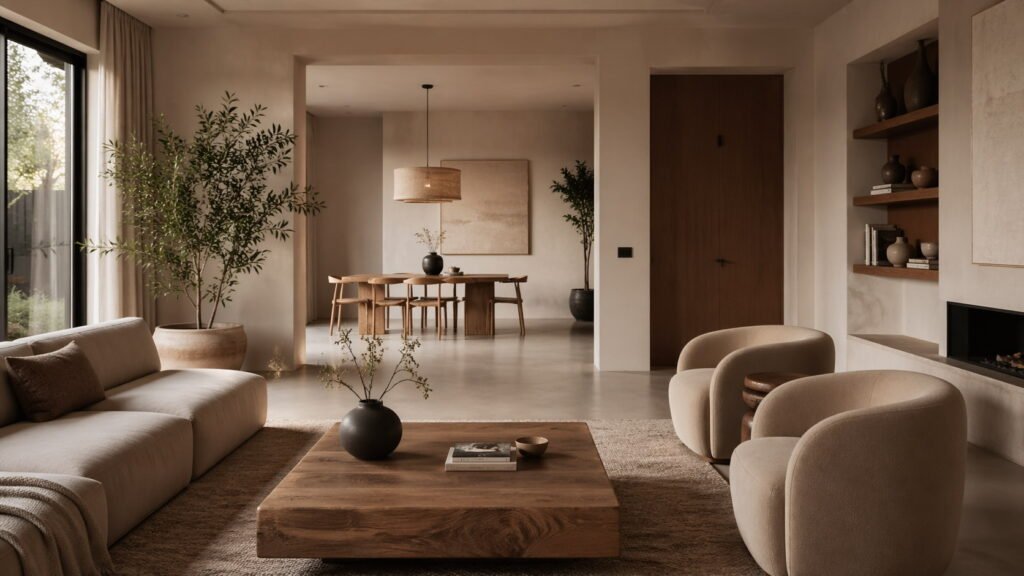
One of the most noticeable decor trends 2027 brings is a complete rethink of color. Stark white interiors are being replaced by warmer, more grounded palettes.
Goodbye cold whites, hello soft neutrals
Pure white walls can feel harsh and clinical. In 2027, minimalist homes lean into:
- Warm beige and sand tones
- Soft taupe and mushroom shades
- Muted greens and clay-inspired hues
These colors create a softer, more inviting atmosphere without adding clutter.
Tonal layering replaces flat design
Instead of one flat color dominating a space, designers are layering multiple shades within the same palette.
For example:
- A living room might combine cream walls, tan upholstery, and warm wood accents
- Subtle contrast adds depth without overwhelming the space
How to apply this at home
You don’t need a full renovation to adopt this trend:
- Swap bright white decor for off-white or warm neutral alternatives
- Introduce textiles (rugs, curtains, cushions) in similar tones
- Use natural materials to reinforce the palette
The result feels minimalist—but never boring.
Decor Trends 2027 for Minimalist Lifestyle Homes: Less Objects, More Meaning
Minimalism in 2027 isn’t about having fewer items just for the sake of it. It’s about choosing pieces that actually matter.
The rise of “fewer but better”
Instead of filling shelves with decor, homeowners are investing in:
- One high-quality statement piece instead of several small items
- Handmade or artisanal objects with character
- Items that serve both function and emotional value
This approach reduces clutter while making the space feel more intentional.
Emotional durability is the new standard
Trends come and go, but meaningful objects last. Decor choices are increasingly driven by:
- Personal memories
- Cultural significance
- Craftsmanship and story
A single ceramic vase made by a local artisan can have more impact than a dozen mass-produced accessories.
Curated, not empty
A common mistake in older minimalist styles was going too far—resulting in spaces that felt lifeless. The 2027 approach finds balance.
A well-curated minimalist space:
- Leaves breathing room between objects
- Highlights each piece intentionally
- Feels calm, but still lived-in and personal
Minimalism isn’t about removing personality—it’s about refining it.
Furniture That Disappears (But Works Harder Than Ever)
Furniture in 2027 minimalist homes isn’t meant to stand out—it’s designed to blend in while doing more. The goal is visual calm without sacrificing functionality.
Low-profile, quiet design
Bulky furniture is being replaced by pieces that sit closer to the ground and feature clean, understated lines. This creates:
- A stronger sense of openness and flow
- Less visual interruption across the room
- A more relaxed, grounded atmosphere
Think slim sofas, platform beds, and tables with softened edges.
Built-ins and seamless storage
Storage is no longer an afterthought. It’s integrated directly into the architecture:
- Wall-to-wall cabinetry that blends with wall color
- Hidden compartments inside benches and beds
- Flush handles or handle-less systems for a clean finish
This approach eliminates visual clutter before it even starts.
Multi-functional furniture for real life
Minimalist living often means maximizing limited space. That’s where smart furniture shines:
- Coffee tables with hidden storage
- Extendable dining tables
- Sofa beds designed for daily use, not just guests
Every piece earns its place, reducing the need for extras.
Texture Over Quantity: The Secret to Non-Boring Minimalism
A minimalist room without texture feels flat. That’s why decor trends 2027 for minimalist lifestyle homes focus heavily on tactile layering instead of adding more objects.
Why texture matters more than ever
When you reduce visual clutter, every detail becomes more noticeable. Texture adds:
- Depth without complexity
- Warmth without extra decor
- Visual interest that feels subtle and refined
A room can feel rich—even with very few elements—if textures are thoughtfully combined.
The key textures dominating 2027
Minimalist homes are embracing materials that feel natural and imperfect:
- Linen and cotton for softness and breathability
- Bouclé and wool for cozy, tactile contrast
- Raw wood and stone for organic grounding
- Matte finishes instead of glossy surfaces
These textures work together to create a layered, inviting environment.
How to layer textures without clutter
Keep it intentional and restrained:
- Stick to 2–4 core materials per space
- Repeat textures in different areas for cohesion
- Balance soft and hard surfaces (e.g., fabric + wood + stone)
The result is a space that feels minimalist—but never empty.
Nature as Decor: Biophilic Minimalism in 2027
Nature is no longer an accessory in minimalist homes—it’s becoming the centerpiece. Biophilic design is one of the most influential decor trends 2027 brings to minimalist living.
Plants as focal points, not fillers
Instead of scattering small plants everywhere, the focus shifts to:
- One large indoor tree in the living room
- Sculptural plants like fiddle leaf figs or olive trees
- Clean, simple planters that match the overall palette
This creates a stronger visual impact with less clutter.
Organic shapes and raw materials
Straight lines are being softened with nature-inspired forms:
- Curved furniture edges
- Irregular stone surfaces
- Handcrafted decor with subtle imperfections
These elements introduce movement and softness into minimalist spaces.
Natural light becomes a design element
Light isn’t just functional—it’s part of the decor:
- Sheer curtains that diffuse sunlight
- Strategic mirror placement to reflect light
- Open layouts that allow light to travel freely
A well-lit minimalist home feels larger, calmer, and more alive.
Lighting as the New Decor Hero
Lighting is no longer just functional—it’s one of the most powerful design tools in decor trends 2027 for minimalist lifestyle homes.
Soft, layered lighting replaces harsh overheads
Single ceiling lights are being replaced with layered lighting strategies:
- Ambient lighting for overall glow
- Task lighting for specific activities
- Accent lighting to highlight textures or features
This creates a space that feels calm, flexible, and visually dynamic.
Sculptural lighting as a focal point
Lighting fixtures are becoming statement pieces in their own right:
- Pendant lights with organic shapes
- Minimalist floor lamps with architectural lines
- Wall sconces that double as art
A well-chosen light can define the entire room—without adding clutter.
Practical tips for better lighting
- Use warm light temperatures (2700K–3000K) for a cozy feel
- Install dimmers to control mood throughout the day
- Position lights to enhance textures and natural materials
Lighting doesn’t just illuminate your home—it shapes how it feels.
The Rise of Personal Minimalism (Not Instagram Minimalism)
Minimalism is becoming more personal and less performative. The perfectly staged, ultra-neutral look is giving way to spaces that reflect real people and real lives.
Designed around habits, not trends
Homes are being tailored to daily routines:
- A reading corner that actually gets used
- A workspace that supports focus and comfort
- Storage placed exactly where it’s needed
This makes minimalist living more practical and sustainable.
Subtle personalization without clutter
Personal touches are still welcome—just more intentional:
- A few meaningful books instead of full shelves
- One or two framed memories instead of gallery walls
- Handmade or inherited items with emotional value
The result feels authentic, not staged.
Why this matters
A home that reflects your lifestyle is easier to maintain and more enjoyable to live in. Minimalism works best when it’s adapted to you, not copied from someone else.
Decor Trends 2027 for Minimalist Lifestyle Homes: Small Space Edition
Minimalism and small-space living go hand in hand—but 2027 takes it further with smarter, more refined solutions.
Vertical space becomes essential
When floor space is limited, walls do more work:
- Tall shelving units that draw the eye upward
- Wall-mounted desks and foldable tables
- Elevated storage that keeps floors clear
This creates the illusion of a larger, more open room.
Optical tricks that expand space
Design choices can dramatically change perception:
- Mirrors to reflect light and depth
- Light, warm color palettes to open up the room
- Low-profile furniture to maintain sightlines
Small adjustments can make a compact home feel twice its size.
Compact living inspiration
Micro-apartments and studio spaces are driving innovation:
- Modular furniture systems
- Hidden storage in unexpected places
- Flexible layouts that shift throughout the day
Minimalism isn’t about having less space—it’s about using space better.
Visual Inspiration: Real-Life Minimalist Spaces That Feel Alive
Seeing trends in action makes them easier to apply. The best minimalist homes in 2027 share a common thread: they feel warm, livable, and intentional.
Living room ideas
- Neutral-toned sofa with layered textures
- One statement coffee table in wood or stone
- Soft lighting paired with a single large plant
Bedroom ideas
- Low platform bed with natural linen bedding
- Minimal decor, but rich in texture
- Warm, diffused lighting for a calming atmosphere
Kitchen ideas
- Handle-less cabinetry for a seamless look
- Open space with minimal countertop items
- Natural materials like wood and stone for warmth
The key takeaway: simplicity doesn’t mean sacrificing character.
Common Mistakes to Avoid in 2027 Minimalist Decor
Even with the right trends, a few missteps can make a space feel off.
Over-minimizing
Removing too much can result in a cold, lifeless room. Minimalism should feel calm—not empty.
Ignoring comfort
Aesthetic choices shouldn’t come at the expense of usability. A beautiful chair that’s uncomfortable won’t last.
Poor lighting decisions
Relying on one harsh light source can ruin the atmosphere. Layering is essential.
Lack of texture
Flat surfaces and uniform materials make spaces feel dull. Texture brings everything to life.
Avoiding these mistakes keeps your home balanced and inviting.
Where Minimalist Decor Trends Are Headed Beyond 2027
Minimalism continues to evolve, moving toward a more holistic lifestyle approach.
The rise of “soft minimalism”
Spaces will feel even warmer and more sensory:
- Softer shapes and materials
- More emphasis on comfort and touch
- Subtle layering instead of stark simplicity
Wellness-driven design
Homes will increasingly support mental and physical well-being:
- Quiet zones for relaxation
- Reduced digital distractions
- Design choices that promote calm and focus
Minimalism as a lifestyle, not a style
The biggest shift is conceptual. Minimalism is no longer just about how a space looks—it’s about how it supports your life.
FAQ: Decor Trends 2027 for Minimalist Lifestyle Homes
What are the biggest decor trends 2027 for minimalist lifestyle homes?
Warm neutral colors, layered textures, hidden storage, sustainable materials, and integrated smart technology are leading the shift toward more livable minimalism.
How do I make a minimalist home feel cozy instead of cold?
Focus on texture, warm lighting, and natural materials. Adding a few meaningful decor pieces also helps create warmth without clutter.
Is minimalism still popular in 2027?
Yes, but it has evolved. The focus is now on comfort, personalization, and sustainability rather than strict simplicity.
What colors work best for minimalist homes in 2027?
Soft neutrals like beige, taupe, and muted greens are replacing stark white to create a warmer, more inviting atmosphere.
How can I decorate a small minimalist space effectively?
Use vertical storage, multi-functional furniture, and light color palettes. Keeping sightlines open also helps the space feel larger.
Minimalist design in 2027 is less about rules and more about intention. If you’re updating your space, start small—adjust your lighting, refine your color palette, or swap out a few pieces for something more meaningful.
For deeper insight into how design choices affect well-being and daily life, you can explore this resource from the Harvard T.H. Chan School of Public Health:
https://www.hsph.harvard.edu/
Take what resonates, leave what doesn’t, and shape a minimalist home that truly supports the way you live.
