
Minimalism is evolving—and modern living room trends 2027 with minimalist furniture layout are no longer about empty rooms or stark white spaces. Today’s approach is smarter, warmer, and deeply functional. The focus has shifted toward intentional layouts that improve how you live, move, and relax in your space.
This guide breaks down exactly how minimalist furniture layouts are changing in 2027, what principles actually matter, and how to apply them in real homes—whether you’re working with a compact apartment or an open-concept living area. Expect practical layout strategies, common mistakes to avoid, and expert-level insights you can use immediately.
Article Contents
Why Minimalist Furniture Layouts Are Defining Modern Living Rooms in 2027
Minimalism didn’t disappear—it matured. What used to be about having less is now about living better with less.
Urban homes are getting smaller, while living rooms are expected to do more. One space might function as a lounge, workspace, and entertainment zone all at once. This shift has made minimalist furniture layout the backbone of modern interior design.
A few key forces are driving this trend:
- Multi-functional living: Rooms must adapt throughout the day
- Visual calm: Clean layouts reduce mental clutter and stress
- Better flow: Open movement paths make spaces feel larger and more breathable
- Intentional ownership: Every piece of furniture earns its place
Rather than filling a room with matching sets, homeowners are choosing fewer, better pieces—and arranging them in ways that prioritize comfort and usability.
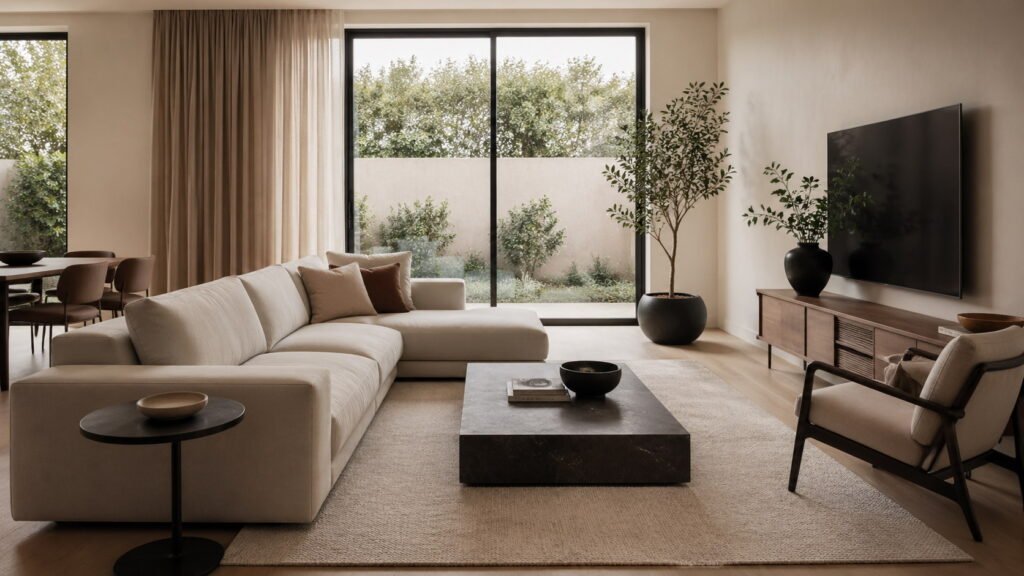
What “Minimalist Furniture Layout” Actually Means in 2027 (It’s Not Just Empty Space)
Minimalist layout is often misunderstood. An empty room with a sofa isn’t minimalist—it’s unfinished.
In 2027, a minimalist furniture layout is defined by purposeful placement, not absence.
The Difference Between Minimal and Under-Furnished
- Minimalist: Thoughtfully selected furniture, spaced for function and flow
- Under-furnished: Lacks comfort, usability, and visual balance
A well-designed minimalist living room still feels complete—it just avoids excess.
Zoning Instead of Filling
Modern layouts are built around zones, not furniture clusters.
Instead of asking “What should I add?”, the better question becomes:
“What does this area need to do?”
Examples of zoning:
- A conversation zone with a sofa and one chair
- A reading corner with a single lounge chair and floor lamp
- A media zone anchored by a low-profile console
Each zone is defined by layout—not walls.
Prioritizing Movement, Light, and Usability
A successful minimalist layout always considers:
- Clear walking paths (no awkward navigation around furniture)
- Natural light flow (avoiding blocked windows)
- Ease of use (everything within comfortable reach)
When these elements are right, the room feels effortless—even with fewer items.
The Rise of “Invisible Design”
Furniture is becoming quieter.
Pieces blend into the space instead of dominating it:
- Sofas with low backs and clean lines
- Floating consoles that free up floor space
- Neutral tones that merge with walls and flooring
The goal is simple: let the layout breathe, not compete for attention.
The Core Principles Behind Modern Living Room Trends 2027
Behind every great minimalist living room is a set of principles that guide layout decisions. These aren’t rigid rules—but they consistently show up in well-designed spaces.
Open Flow Comes First
Furniture placement should never interrupt movement.
A strong layout:
- Allows you to walk through the room naturally
- Avoids tight or blocked pathways
- Creates a sense of openness—even in small spaces
A quick test: if you have to sidestep or squeeze past furniture, the layout needs refinement.
Visual Balance Over Perfect Symmetry
Symmetry can feel rigid. In 2027, designers are leaning toward balanced asymmetry.
Examples:
- A sofa paired with one chair instead of two identical ones
- A large coffee table balanced by a smaller side table
- Offset layouts that feel dynamic but still cohesive
The result feels more relaxed and lived-in.
Multi-Functionality Is the Default
Every piece should serve more than one purpose whenever possible.
Look for:
- Ottomans that double as storage
- Modular seating that adapts to different needs
- Coffee tables with hidden compartments
This reduces clutter without sacrificing usability.
Negative Space Is a Design Element
Empty space is no longer “wasted”—it’s intentional.
Leaving gaps between furniture:
- Enhances visual clarity
- Makes the room feel larger
- Highlights the pieces that matter most
Think of negative space as a frame that makes your layout stand out.
Emotional Comfort Matters as Much as Aesthetics
A minimalist layout shouldn’t feel cold.
The best modern living room trends in 2027 prioritize:
- Comfortable seating angles
- Easy conversation flow
- A sense of calm and ease
If a room looks perfect but feels awkward, the layout isn’t working.
The 2027 Minimalist Layout Formula (A Simple Framework to Follow)
A beautiful minimalist living room isn’t accidental—it follows a clear structure. This 2027 minimalist furniture layout formula helps you design a space that feels intentional without overthinking every detail.
Start With an Anchor Piece
Every layout needs a visual foundation.
In most living rooms, this is:
- A sofa (straight, L-shaped, or modular)
- Occasionally two lounge chairs in smaller spaces
Place your anchor where it naturally connects to the room’s focal point. Avoid defaulting to walls—floating the sofa often creates a more modern, breathable layout.
Define One Clear Focal Point
Too many focal points create visual noise. Choose one:
- A media wall or TV unit
- A fireplace
- A large window or outdoor view
Arrange your main seating to acknowledge this focal point—not necessarily face it perfectly, but feel connected to it.
Add Only 2–3 Supporting Pieces
Minimalism thrives on restraint.
Limit additional furniture to:
- One coffee table or ottoman
- One accent chair or side table
- Optional: a slim console or storage unit
Each piece should solve a need. If it doesn’t serve a function, it probably doesn’t belong.
Follow “Breathing Space” Rules
Spacing is what separates a clean layout from a cramped one.
Use these practical guidelines:
| Element | Ideal Spacing |
| Sofa to coffee table | 14–18 inches |
| Walking paths | 30–36 inches |
| Between seating pieces | 18–24 inches |
These gaps create visual rhythm and make movement effortless.
Adjust for Room Size
- Small living rooms: Use fewer pieces, keep layouts open, prioritize leggy (raised) furniture
- Large living rooms: Create multiple zones instead of spreading furniture too far apart
A common mistake is scaling furniture incorrectly. Bigger rooms don’t need more pieces—they need better grouping.
Smart Furniture Choices That Define Minimalist Living Rooms in 2027
Minimalist layouts only work when the furniture supports them. In 2027, furniture design is shifting toward lighter, smarter, and more adaptable pieces.
Low-Profile Sofas and Floating Furniture
Bulky, overstuffed sofas are fading out.
What’s replacing them:
- Low-profile sofas that keep sightlines open
- Slim arms and clean silhouettes
- Raised legs that reveal more floor space
These details make a room feel instantly larger and more modern.
Modular and Reconfigurable Seating
Flexibility is everything.
Modular sofas allow you to:
- Rearrange layouts for different occasions
- Expand or reduce seating as needed
- Adapt to evolving living habits
This is especially valuable in multi-purpose living rooms.
Sculptural Yet Simple Coffee Tables
Coffee tables are no longer just functional—they’re subtle design statements.
Trending styles:
- Rounded or organic shapes
- Lightweight materials like glass or light wood
- Slim bases that don’t visually clutter the room
The key is balance: interesting, but not overpowering.
Hidden Storage Furniture
Clutter breaks minimalism faster than anything else.
Look for:
- Ottomans with internal storage
- Lift-top coffee tables
- Consoles with concealed compartments
These keep essentials accessible without disrupting the clean layout.
Why Bulky Furniture Is Disappearing
Heavy furniture visually “anchors” a room—but often in the wrong way.
Modern minimalist living room trends in 2027 favor:
- Pieces that feel movable and adaptable
- Furniture that doesn’t dominate the layout
- Designs that enhance flow instead of blocking it
If a piece feels too heavy for the space, it probably is.
Layout Mistakes That Instantly Break a Minimalist Living Room
Even with the right furniture, small layout mistakes can undo the entire minimalist effect. These are the most common issues—and how to fix them.
Pushing All Furniture Against the Wall
It seems logical, but it often backfires.
Why it fails:
- Creates a hollow, disconnected center
- Reduces intimacy in seating areas
- Makes the room feel less designed
Fix: Float at least one main piece (like the sofa) inward to define a zone.
Over-Layering Rugs and Decor
Minimalism isn’t about stacking textures endlessly.
Too many:
- Rugs
- Throw pillows
- Decorative objects
…can create subtle clutter.
Fix: Choose fewer, higher-quality elements that stand out on their own.
Ignoring Scale and Proportion
A minimalist room depends heavily on proportion.
Common mistakes:
- Oversized sofas in small rooms
- Tiny coffee tables that look lost
- Mismatched heights and depths
Fix: Keep furniture visually balanced—no piece should overpower or disappear.
Too Many Competing Focal Points
A TV, fireplace, gallery wall, and bold shelving all fighting for attention? That’s chaos.
Fix: Let one element lead. Everything else should support it quietly.
“Minimalist Clutter” (Too Many Small Items)
Ironically, minimal spaces often get filled with tiny decor pieces.
This creates:
- Visual noise
- Fragmented attention
- A less cohesive look
Fix: Replace multiple small items with one meaningful statement piece.
Small Space? These Minimalist Layout Tricks Change Everything
Small living rooms benefit the most from a well-executed modern living room trends 2027: minimalist furniture layout. The right layout can make a compact space feel open, functional, and surprisingly comfortable.
Float Your Layout (Yes, Even in Small Rooms)
Pushing everything against the wall often makes a room feel tighter.
Instead:
- Pull the sofa slightly inward
- Add a small rug to define the seating zone
- Leave space behind furniture to create depth
This simple shift can make the room feel intentionally designed, not cramped.
Use Vertical Space—But Keep It Light
Storage is essential, but heavy vertical elements can overwhelm.
Smarter approach:
- Choose slim, tall shelving instead of bulky cabinets
- Leave gaps between shelves for visual breathing room
- Avoid filling every inch—empty space matters here too
The goal is to draw the eye upward without adding visual weight.
Multi-Purpose Furniture Placement
In small spaces, placement matters as much as the piece itself.
Examples:
- A storage ottoman positioned centrally as both table and seating
- A side table that doubles as a work surface
- A bench behind the sofa for extra function without crowding
Every item should justify its position and purpose.
Use Optical Illusions to Expand the Room
Strategic layout choices can visually double your space.
Try:
- Mirrors placed opposite windows to reflect light
- Furniture with exposed legs to reveal more floor area
- Low-profile pieces to maintain open sightlines
These tricks work because they reduce visual barriers.
Keep Pathways Clear and Obvious
Tight navigation instantly makes a room feel smaller.
Aim for:
- At least one clear, unobstructed walking path
- No zig-zag movement around furniture
- Logical entry and exit points
When movement feels easy, the room feels bigger—no renovation required.
Open-Concept Living: Minimalist Layout Strategies That Actually Work
Open-concept homes are everywhere in 2027—but without structure, they can feel chaotic. A minimalist furniture layout is the key to making these spaces feel cohesive and calm.
Define Zones Without Building Walls
Open spaces still need structure.
Use furniture to create zones:
- Sofa placement to define the living area
- Dining table as a natural boundary
- Rugs to visually separate functions
Each zone should feel distinct—but not disconnected.
Use Furniture as Subtle Dividers
Instead of adding partitions, let furniture do the work.
Effective dividers include:
- A low-back sofa separating living and dining areas
- A console table placed behind seating
- Open shelving that maintains visibility while creating structure
These elements maintain flow while adding organization.
Keep a Consistent Visual Language
Clashing styles break the minimalist effect instantly.
Maintain consistency through:
- Similar color palettes across zones
- Repeating materials (wood, metal, fabric)
- Cohesive shapes and silhouettes
This creates a seamless transition from one area to another.
Prioritize Flow Between Spaces
Open-concept layouts succeed or fail based on movement.
Make sure:
- Pathways connect naturally between zones
- Furniture doesn’t interrupt transitions
- Each area feels accessible without crossing obstacles
A well-planned layout should feel almost invisible—you move through it without thinking.
Color, Materials, and Texture: The Silent Drivers of Minimalist Layouts
Furniture placement is only part of the story. In modern living room trends 2027, color, materials, and texture quietly shape how a layout feels and functions.
Neutral Palettes With Depth (Not Flat White)
Minimalist doesn’t mean colorless.
Instead of stark white, 2027 trends lean toward:
- Warm neutrals (beige, taupe, soft gray)
- Earth tones (clay, sand, muted greens)
- Layered shades within the same palette
This adds dimension without overwhelming the layout.
Natural Materials That Ground the Space
Materials influence how “heavy” or “light” a room feels.
Popular choices:
- Wood for warmth and balance
- Linen and cotton for softness
- Stone or ceramic for subtle contrast
Natural finishes help minimalist layouts feel inviting rather than sterile.
Texture Layering Instead of Object Layering
Minimalist spaces avoid excess decor—but they don’t feel flat.
The trick is to layer textures, not items:
- A woven rug under a clean-lined sofa
- A textured throw on a neutral couch
- Matte and glossy finishes combined subtly
This creates visual interest without adding clutter.
How Finishes Affect Spatial Perception
Every surface contributes to how spacious a room feels.
- Matte finishes absorb light → cozier, softer atmosphere
- Glossy or reflective surfaces bounce light → brighter, more open feel
- Light-toned materials expand visual space
- Dark accents add contrast and depth when used sparingly
Small adjustments here can dramatically elevate your layout.
Visual Inspiration: Minimalist Furniture Layout Ideas for 2027
Sometimes the easiest way to understand a modern living room trends 2027: minimalist furniture layout is to see how different styles come together. These layout directions are leading the way this year—and each offers a distinct feel while staying true to minimalist principles.
Soft Organic Layout (Relaxed and Flowing)
This style embraces comfort and natural movement.
Key elements:
- Curved sofas or rounded chairs
- Asymmetrical layouts that feel effortless
- Soft spacing between furniture pieces
Perfect for creating a calm, welcoming living room that doesn’t feel rigid.
Structured Modern Layout (Clean and Intentional)
For those who prefer clarity and order.
Features include:
- Straight-lined furniture
- Balanced (but not overly symmetrical) arrangements
- Defined zones with clear purpose
This approach works especially well in medium to large living rooms.
Japandi-Inspired Layout (Calm + Functional)
A blend of Japanese simplicity and Scandinavian warmth.
Characteristics:
- Low furniture profiles
- Neutral, nature-inspired tones
- Highly intentional spacing
The result is a space that feels quiet, grounded, and deeply functional.
Tech-Integrated Minimalist Layout
Technology is becoming invisible—and layouts are adapting.
What defines this style:
- Hidden TVs or retractable screens
- Wireless lighting and sound systems
- Furniture arranged around flexible tech use
The layout stays clean while still supporting modern living.
How Technology Is Shaping Modern Living Room Layouts
Technology isn’t just an add-on anymore—it directly influences how furniture is arranged in 2027.
Wireless Living Creates Cleaner Layouts
Fewer cables mean fewer constraints.
Benefits:
- Furniture can float freely without being tied to outlets
- Cleaner lines and uncluttered surfaces
- More flexibility to rearrange layouts
This shift alone has redefined what’s possible in minimalist design.
Smart Furniture With Built-In Functionality
Furniture is becoming more intelligent and space-efficient.
Examples:
- Sofas with built-in charging ports
- Coffee tables with hidden tech compartments
- Adjustable lighting integrated into furniture
This reduces the need for extra items, keeping layouts simple.
Flexible Layouts for Hybrid Living
Living rooms now serve multiple roles throughout the day.
Layouts are adapting with:
- Movable furniture that reconfigures easily
- Open zones that shift from work to relaxation
- Lightweight pieces that can be repositioned quickly
A static layout no longer works—flexibility is essential.
Lighting Automation Influences Placement
Lighting is shaping how furniture is positioned.
Considerations:
- Layered lighting zones (ambient, task, accent)
- Smart lighting that adapts to different activities
- Furniture placed to maximize lighting effects
Well-planned lighting enhances both function and atmosphere.
Budget-Friendly Ways to Achieve a Minimalist Living Room Layout
Creating a minimalist layout doesn’t require a full redesign. In many cases, it’s about editing and rearranging, not buying more.
Rearrange Before You Replace
Start with what you already own.
Try:
- Repositioning your sofa away from the wall
- Removing one or two unnecessary pieces
- Redefining zones using your current furniture
Small changes often create the biggest impact.
Edit Ruthlessly (What to Remove First)
Minimalism begins with subtraction.
Focus on removing:
- Redundant side tables
- Extra seating that rarely gets used
- Decorative items that don’t add value
Clearing space instantly improves layout clarity.
Invest in One Statement Piece
If you do buy something new, make it count.
Prioritize:
- A high-quality sofa
- A versatile coffee table
- A standout chair that anchors the room
One strong piece can elevate the entire layout.
Mix Thrifted and Modern Elements
Minimalist doesn’t mean expensive.
Combine:
- Secondhand finds with clean silhouettes
- Simple modern pieces with character items
- Neutral bases with subtle vintage accents
This approach keeps costs down while adding personality.
Related Trend: Minimalist Decor vs. Minimalist Layout (And Why They’re Not the Same)
Many people confuse decor with layout—but they serve different roles in a living room.
Layout = Structure, Decor = Styling
- Layout determines how the space functions
- Decor enhances how it looks
A room can have beautiful decor but still feel awkward if the layout is off.
Why Layout Matters More in 2027
Modern living room trends are prioritizing:
- Functionality over ornamentation
- Flow over visual density
- Comfort over excessive styling
Without a strong layout, decor can’t fix the space.
How to Align Both Without Overdoing It
- Start with layout first, always
- Add decor gradually and intentionally
- Focus on fewer, meaningful pieces
This keeps the minimalist look cohesive and controlled.
Future Outlook: Where Minimalist Living Room Trends Are Heading Beyond 2027
Minimalism isn’t static—it continues to evolve alongside how people live.
More Adaptive, Movable Living Spaces
Furniture will become:
- Lighter
- Easier to reconfigure
- Designed for constant change
Rooms will adapt in minutes, not hours.
Furniture as Architecture
Built-in elements are gaining popularity.
Expect to see:
- Integrated seating
- Wall-to-wall storage systems
- Seamless furniture that feels part of the structure
This reduces visual clutter even further.
Sustainability Driving Fewer, Better Pieces
Consumers are becoming more selective.
Trends include:
- Investing in long-lasting furniture
- Choosing eco-friendly materials
- Reducing unnecessary consumption
Minimalism naturally aligns with sustainable living.
Emotional Minimalism Takes Center Stage
Future spaces will focus on how they feel, not just how they look.
Design goals:
- Reduce stress
- Improve relaxation
- Create a sense of calm and clarity
Minimalist layouts will be judged by comfort as much as aesthetics.
Final Thought: Designing a Living Room That Feels Effortless, Not Empty
A successful modern living room trends 2027: minimalist furniture layout isn’t about removing everything—it’s about making every choice count.
Focus on:
- Clear structure
- Intentional furniture placement
- Space that supports your daily life
When done right, minimalist design doesn’t feel empty—it feels balanced, functional, and quietly beautiful.
FAQ: Modern Living Room Trends 2027: Minimalist Furniture Layout
What is the ideal minimalist furniture layout for a small living room in 2027?
The ideal layout uses a floating sofa, one multi-functional piece (like an ottoman), and clear walking paths. Keep furniture minimal but purposeful, and prioritize open space over extra seating.
How many pieces of furniture should a minimalist living room have?
Most modern minimalist living rooms work best with 3–5 core pieces: a sofa, a table, optional seating, and minimal storage. The exact number depends on room size and function.
Can a minimalist living room still feel cozy?
Yes—coziness comes from texture, lighting, and layout. Soft materials, warm neutrals, and comfortable spacing make minimalist spaces feel inviting rather than cold.
What colors work best for minimalist living room trends 2027?
Warm neutrals, earthy tones, and layered shades are trending. These add depth and warmth without overwhelming the layout.
Is minimalist furniture layout expensive to achieve?
Not necessarily. Rearranging existing furniture, removing excess items, and investing in one key piece can create a minimalist layout without a large budget.
For deeper insight into how thoughtful spaces influence communication and well-being, you can explore this resource from a trusted authority:
https://www.apa.org/monitor/2015/03/cover-environment
Ready to transform your living room? Start by removing one unnecessary piece today—and rebuild your layout with intention.
